

Pet Grooming Tips: How to Care for Your Dog's Coat and Control Shedding
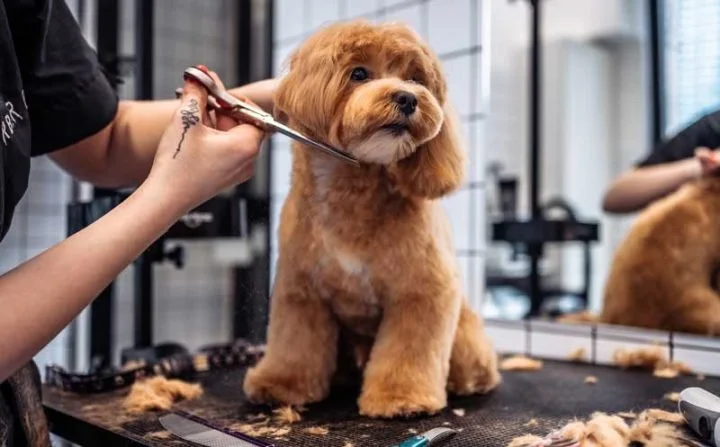
Grooming isn’t just about making your dog look stylish; it is an important part of your pet’s health care. Grooming maintains the health of the skin and cleanses mattes and tangles from the hair, leaving it shiny and under control. Grooming also means you will pick up any lumps, scrapes or abnormalities on the skin early, which could otherwise become serious issues.
Dogs all require different levels of grooming that are based upon breed, coat, shedding, and skin and coat sensitivity. Knowing these grooming needs for your dog will help make grooming less time-consuming and more productive.
Why regular grooming matters
Health benefits:
Removes dead hair and skin cells that clog pores
Distributes natural oils for healthier skin and coat
Prevents matting that pulls on skin and causes pain
Early detection of fleas, ticks, lumps, or injuries
Reduces shedding around your home
Relationship benefits:
Touch helps you notice when your dog feels unwell
Creates positive associations with handling
Makes vet visits and grooming appointments less stressful
Grooming by coat type
Short smooth coats (Labrador, Staffies, Boxers)
Frequency: Weekly brushing, bathe every 4-6 weeks
Best tools:
- Rubber curry brush (weekly dead hair removal)
- Short-bristle brush (polish coat shine)
- Hound glove (daily maintenance)
Technique: Brush in the direction of hair growth using short, firm strokes. Focus on the back, sides, and tail base where dead hair collects.
Double coats (Australian Shepherds, Huskies, Kelpies)
Frequency: Brush 2-3 times weekly year-round, daily during shedding season
Best tools:
- Undercoat rake (removes dense undercoat)
- Slicker brush (surface hair)
- Wide-tooth comb (check for mats)
Important: Never shave double-coated breeds. The undercoat insulates against both heat AND cold.
Wire/wavy coats (Jack Russell, Border Terriers)
Frequency: Brush 2-3 times weekly, hand-stripping every 2-3 months
Best tools:
- Wire pin brush
- Stripping knife (professional use)
- High-velocity dryer (loose hair removal)
Long/silky coats ( Cavalier King Charles, Shih Tzu)
Frequency: Daily brushing, professional grooming every 6 weeks
Best tools:
- Slicker brush + wide-tooth comb combo
- Detangling spray
- Coat conditioner
Pro technique: Divide coat into sections, brush from skin outward, then comb through.
Shedding control strategies
Heavy shedders (German Shepherds, Labs, Huskies):
1. Daily brushing with undercoat rake (5-10 mins)
2. Bath with de-shedding shampoo every 4 weeks
3. Add omega-3 supplements (vet recommended)
4. Use lint rollers on furniture daily
5. Wash pet bedding weekly in hot water
Seasonal shedding:
Double-coated breeds "blow coat" twice yearly
Brush twice daily during shedding season
Use a high-velocity dryer to blast out loose undercoat
Step-by-step grooming routine
1. Preparation (5 minutes)
- Gather tools and treats
- Choose a quiet time when the dog is calm
- Have a positive attitude (dogs sense stress)
2. Brushing (10-15 minutes)
- Start with the least sensitive areas (back, sides)
- Work toward belly, legs, tail
- Check skin as you brush (redness, lumps, fleas)
- Reward calm behaviour frequently
3. Bathing (15-20 minutes, every 4-6 weeks)
DO: Lukewarm water, vet-recommended shampoo, thorough rinse
DON'T: Human shampoo, hot water, eyes/ears
4. Drying (10 minutes)
- Towel dry first (pat, don't rub)
- Low-heat blow dryer at a safe distance
- Let air dry completely before outdoor time
5. Nail trimming (weekly check)
- Only trim clear tip (avoid pink quick)
- Use purpose-made pet nail clippers
- Reward heavily — most dogs hate this
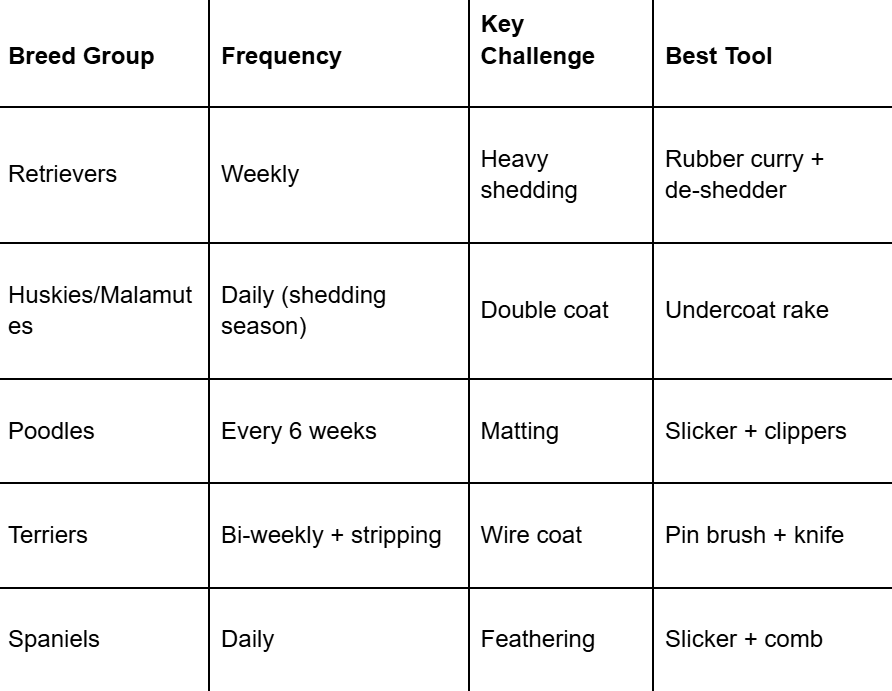
Breed-specific grooming guide
Troubleshooting common coat problems
Dry/flaky skin:
• Add omega-3 fish oil (vet dose)
• Switch to sensitive skin shampoo
• Increase brushing to distribute oils
• Check for food allergies
Excessive shedding:
• Rule out health issues (thyroid, allergies)
• Add dietary fibre (pumpkin, sweet potato)
• Use de-shedding shampoo weekly
• Professional de-shedding treatment
Hot spots (moist dermatitis):
• Stop licking immediately (cone/collar)
• Veterinary treatment essential
• Keep dry and clean during healing
Safe at-home vs professional grooming
DIY when:
Short-coated breeds
Regular maintenance brushing
Nail trimming (with confidence)
Ear cleaning (if trained)
Professional when:
❌ First-time grooming
❌ Severe matting
❌ Complex coat types
❌ Skin/medical conditions
❌ Show clip grooming
Products every pet owner needs
Essential kit (~$100 total):
• Slicker brush ($25)
• Undercoat rake ($20)
• Nail clippers ($15)
• Sensitive skin shampoo ($15)
• Detangling spray ($10)
• Treats for positive reinforcement ($15)
Seasonal grooming considerations
Summer: More frequent baths, shorter walks before/after grooming, paw protection from hot pavement
Winter: Less bathing (dry skin risk), moisturising coat conditioners, paw balm for salt/chemicals
Making grooming stress-free
1. Start young (gentle handling from puppyhood)
2. Keep sessions short (5-10 mins max)
3. Always pair with high-value treats
4. End on a positive note (even if incomplete)
5. Never punish fear or discomfort
6. Progress gradually (touch → brush → bath)
There’s no need to make pet grooming stressful. The Pawshare Club brings together members of your local community who are fellow dog lovers with experience of dealing with dog hair, shedding, and grooming. As owners of Australian terrier breed dogs, our members have valuable advice and experience to share with you.
Part of a network that can share tips, pet sit in your honour during appointment times, and offer support. Check out the Pawshare Club and sign up!